
Engineering Consultancy & Pump Selection Services
As a professional industrial pump manufacturer, WTY Pumps assesses medium properties, working parameters (pressure/temperature), and site environmental conditions to recommend the best pump solutions for your unique working conditions. Below is the engineering analysis of common pump types, including their performance characteristics and selection guidance:
Engineering Consultancy & Pump Selection Services
Centrifugal Pump for Process Fluid Transportation & Pressure Regulation
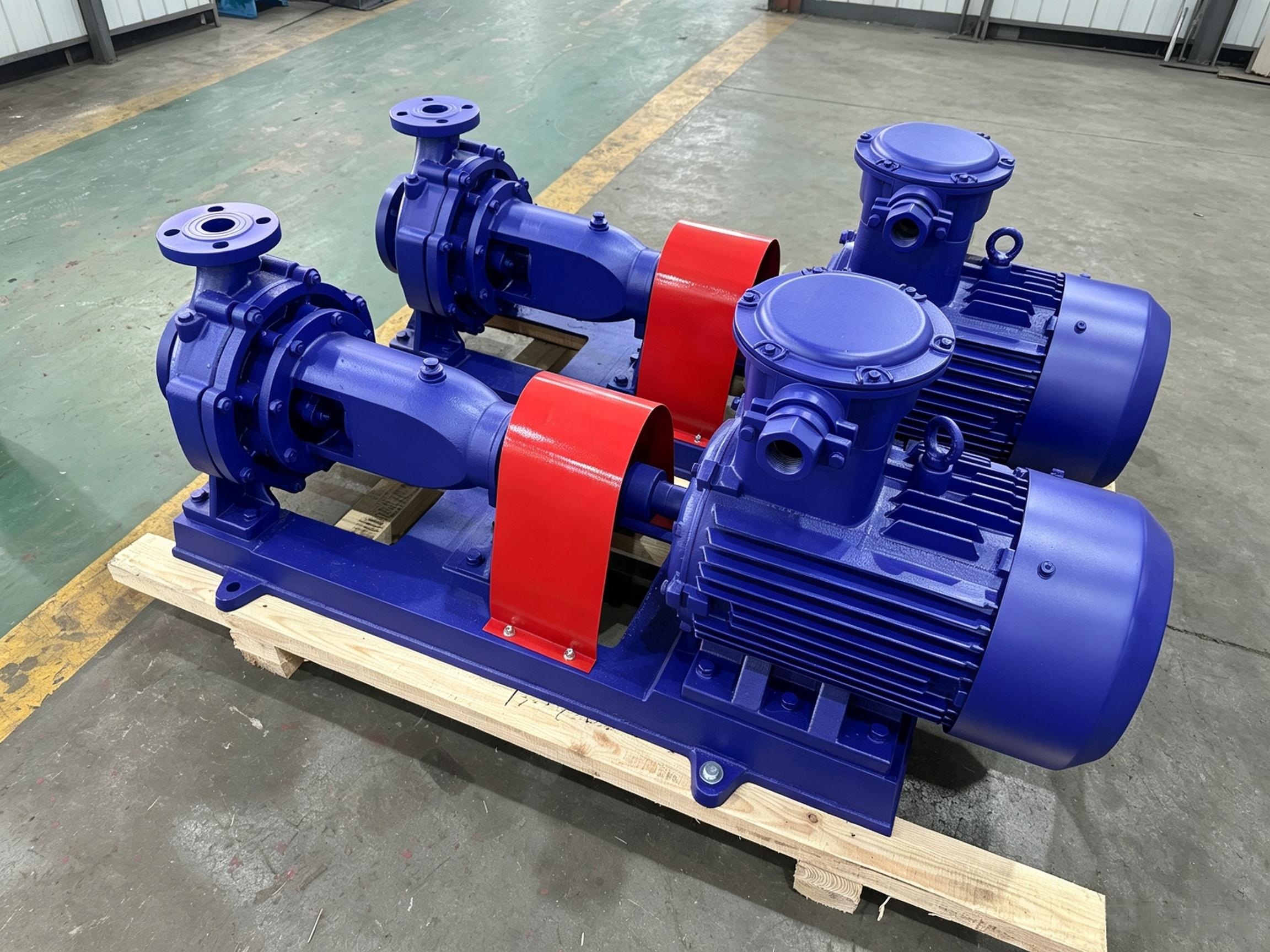
Precise flow and pressure control is critical to maximize fluid transmission efficiency and secure system stability. WTY centrifugal pumps adopt optimized hydraulic designs to deliver stable flow within the designed operating range, suitable for continuous circulation and fluid transfer in process pipelines.
Stable Operation & System Reliability Centrifugal pumps produce smooth, continuous flow with low pulsation. The matched impeller and casing structure maintains steady outlet pressure, helping operators keep process parameters stable and ensuring safe and consistent operation for liquid medium applications.
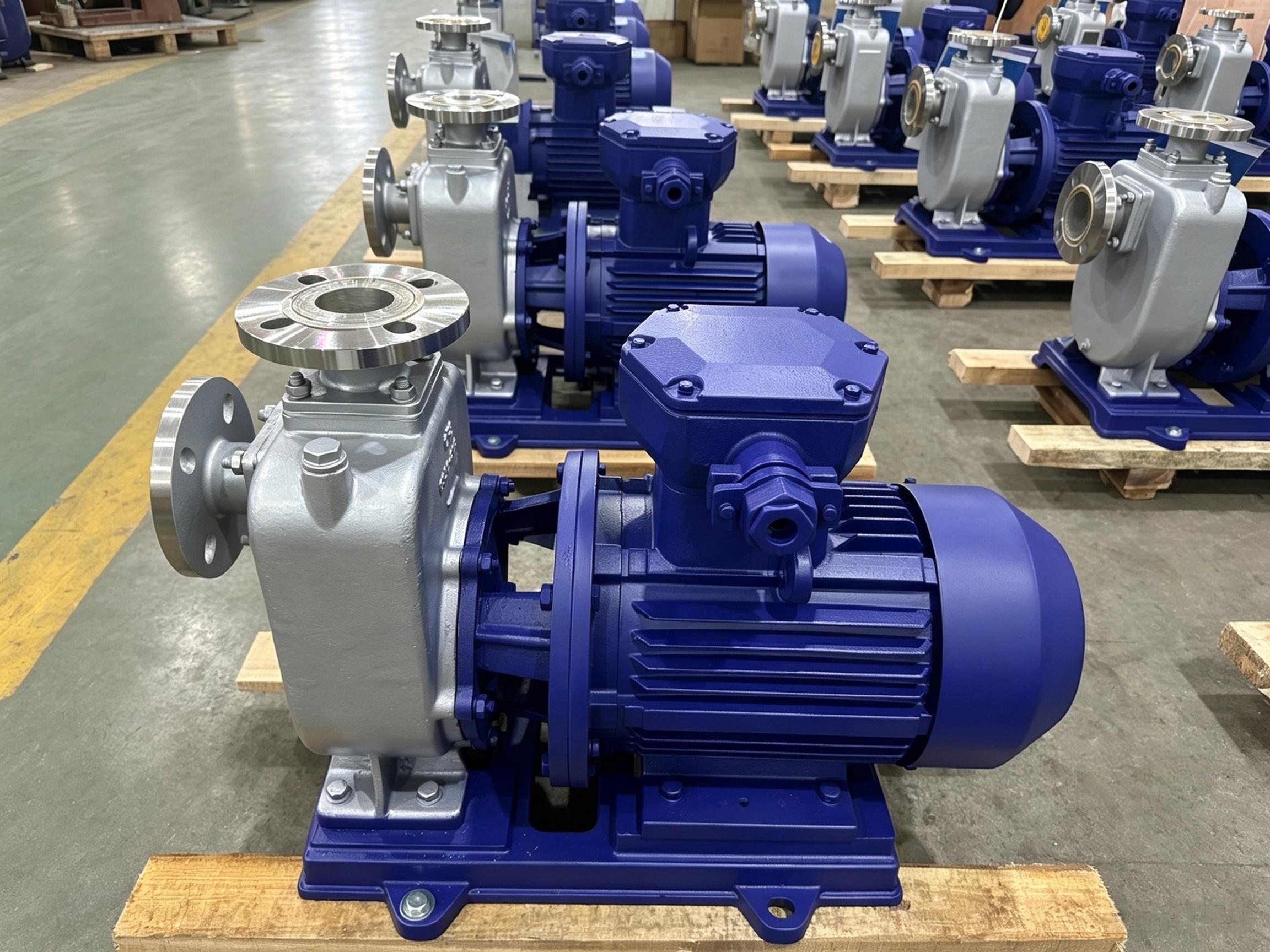
Core Value for Liquid Intake WTY self-priming pumps are widely used in scenarios where the liquid level is below the pump installation position. Unlike standard centrifugal pumps, they can automatically expel air inside the pump body and resume liquid suction without pre-filling the casing before startup, which greatly simplifies on-site operation.
Built for Air-Liquid Mixed Media Specially optimized internal cavity and recirculation structure enables self-priming pumps to handle media containing a small amount of entrained gas. This design avoids air binding issues common in ordinary centrifugal pumps, reduces downtime, and improves continuous operational stability under variable suction conditions.
Self-Priming Pump for Liquid Suction with Limited NPSH Conditions
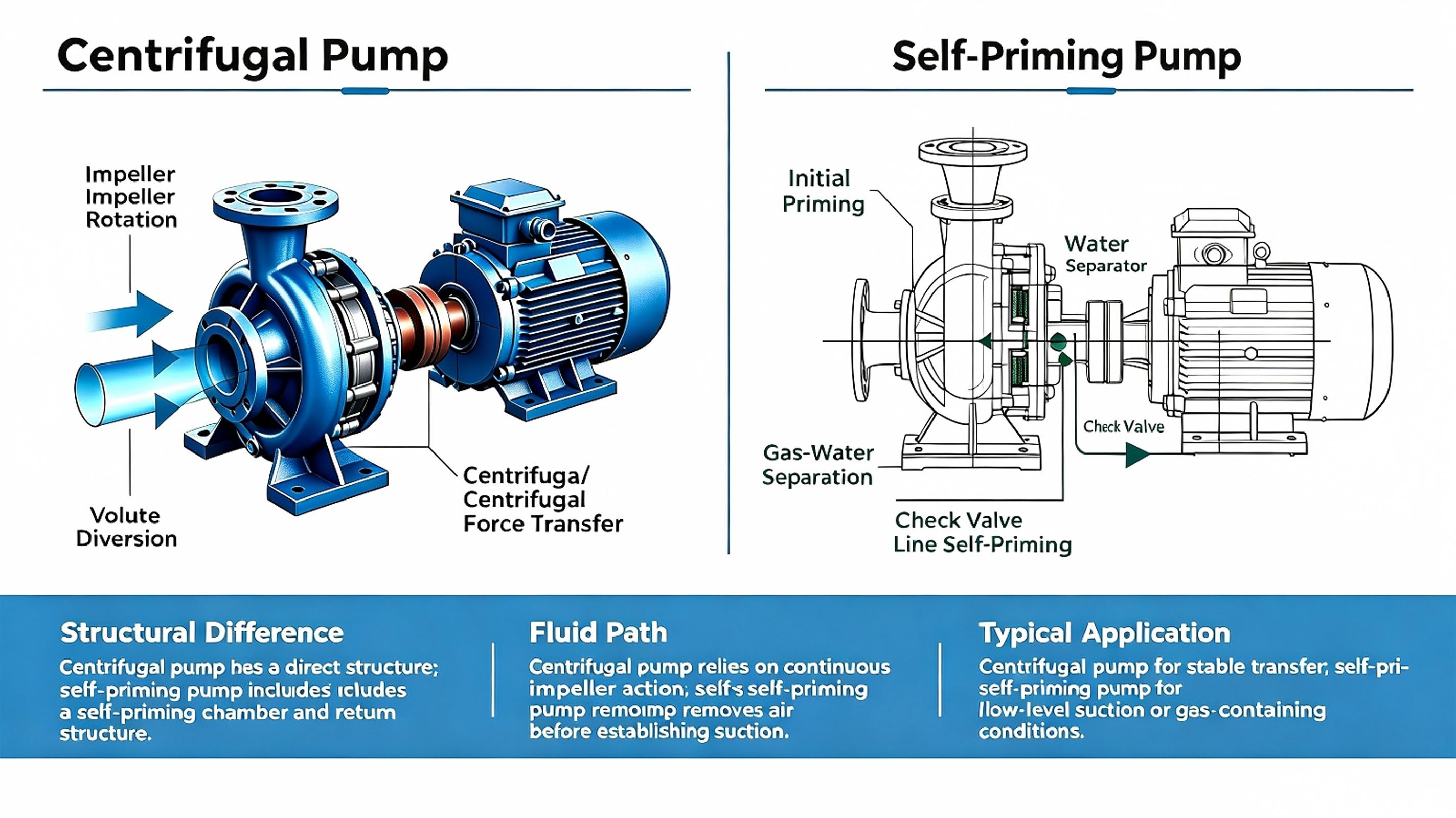
Core Mechanism & Operational Differences
The essential difference between centrifugal pumps and self-priming pumps lies in internal hydraulic structure and suction performance: Centrifugal Pumps (Conventional Process Transfer): Rely on high-speed rotating impellers to generate centrifugal force and build pressure. Liquid must fill the pump casing before startup. The rotating impeller accelerates the liquid to realize energy conversion for fluid delivery. They are ideal for continuous liquid transfer with sufficient inlet liquid level.
Self-Priming Pumps (Air-handling Suction): A modified type of centrifugal pump with a built-in liquid storage chamber. It can separate air and liquid inside the pump during startup. Air is discharged from the pipeline automatically, and liquid is drawn up. No continuous liquid filling is required before operation.
Centrifugal Pump Application & Selection Guidelines
Choose centrifugal pumps for continuous liquid transfer with adequate positive suction head. Key selection parameters include:
· Hydraulic Performance: Confirm the working point falls within the pump’s best efficiency range to avoid overload or cavitation risk.
· NPSH Requirement: Make sure the system available NPSH exceeds pump NPSHr to prevent cavitation damage.
· Medium Properties: Select proper wetted materials according to corrosion, temperature and solid particle content.
· Limitation: Standard centrifugal pumps cannot pump air; they lose suction if air enters the pump chamber.
Self-Priming Pump Application & Selection Guidelines
Choose self-priming pumps when suction lift is required or the pipeline may contain trapped air. Key features include:
· Convenient Startup: No need for foot valve or pre-filling, suitable for intermittent operation and remote sites.
· Air-liquid Mixture Tolerance: Can handle media with a small volume of entrained gas.
· Performance Limitation: Lower efficiency compared with standard centrifugal pumps at the same flow and head; not recommended for high-viscosity or heavily particulate media.