2025-05-06
Efficient Self-priming Centrifugal Pump
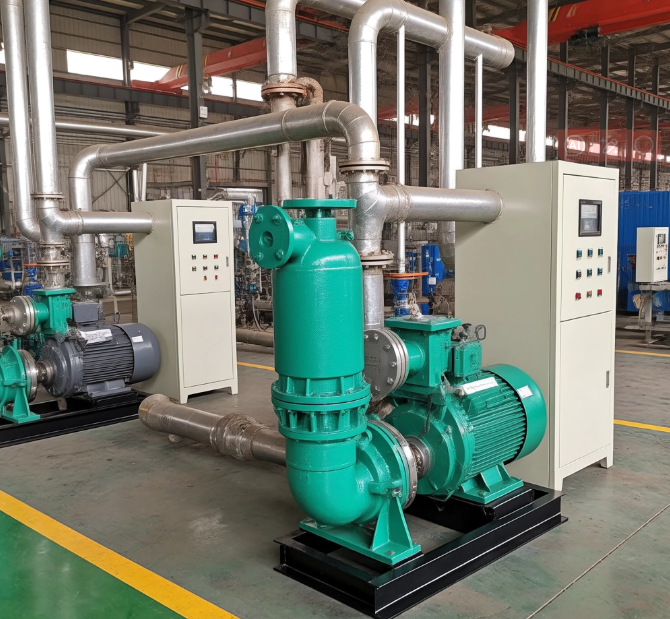
A self-priming pump is a type of centrifugal pump with self-priming capability. Its characteristic is that it does not require priming before startup or only needs a small amount of liquid to automatically draw and transport fluids. It forms a negative pressure when the impeller rotates through a unique pump body structure (such as a gas-liquid separation chamber, a reflux hole, etc.), quickly discharging the air in the suction pipe to achieve the "dry suction" function. Self-priming pumps are widely used for transporting clean water, oil or slightly corrosive liquids. They are commonly found in fields such as agricultural irrigation, chemical engineering, fire protection, shipping and municipal engineering. They are especially suitable for working conditions where the liquid level is lower than the pump. They have the advantages of easy installation and low maintenance cost. The self-priming height can generally reach 5 meters.
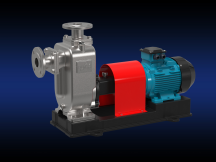
Main components of self-priming pump:
1. Pump body: including suction chamber and discharge chamber, with gas-liquid separation chamber and reflux hole inside.
2. Impeller: Centrifugal or mixed flow design, which generates centrifugal force during rotation to separate liquid from air.
3. Pump shaft and bearings: support impeller rotation and transmit motor power.
4. Mechanical seal/packing seal: prevents liquid leakage.
5. Gas liquid separation chamber: temporarily stores the inhaled air and liquid to promote gas liquid separation.
6. Reflux hole or one-way valve: allowing liquid to flow back to the impeller, helping to exhaust and enhance self-priming ability.
7. Import and export pipelines: Connect the suction end and discharge end respectively.
1. Pump body: including suction chamber and discharge chamber, with gas-liquid separation chamber and reflux hole inside.
2. Impeller: Centrifugal or mixed flow design, which generates centrifugal force during rotation to separate liquid from air.
3. Pump shaft and bearings: support impeller rotation and transmit motor power.
4. Mechanical seal/packing seal: prevents liquid leakage.
5. Gas liquid separation chamber: temporarily stores the inhaled air and liquid to promote gas liquid separation.
6. Reflux hole or one-way valve: allowing liquid to flow back to the impeller, helping to exhaust and enhance self-priming ability.
7. Import and export pipelines: Connect the suction end and discharge end respectively.


Working principle of self-priming pump
1. Initial start-up: There is a small amount of liquid in the pump body (or the pump is filled for the first time). When the impeller rotates at high speed, the liquid mixes with the inhaled air to form a gas-liquid mixture.
2. Gas liquid separation: The mixture enters the gas liquid separation chamber, and due to the density difference, air is discharged. The liquid returns to the impeller through the reflux hole due to gravity and circulates again.
3. Create a vacuum: Continuous circulation gradually reduces the air in the suction pipeline, forming negative pressure, and the external liquid is sucked into the pump.
4. Normal delivery: After the air is exhausted, the pump switches to a pure liquid delivery state, completing the self-priming process.
1. Initial start-up: There is a small amount of liquid in the pump body (or the pump is filled for the first time). When the impeller rotates at high speed, the liquid mixes with the inhaled air to form a gas-liquid mixture.
2. Gas liquid separation: The mixture enters the gas liquid separation chamber, and due to the density difference, air is discharged. The liquid returns to the impeller through the reflux hole due to gravity and circulates again.
3. Create a vacuum: Continuous circulation gradually reduces the air in the suction pipeline, forming negative pressure, and the external liquid is sucked into the pump.
4. Normal delivery: After the air is exhausted, the pump switches to a pure liquid delivery state, completing the self-priming process.
Characteristics of Self-priming Pump
Structural advantages:
Enlarge pump chamber: store more liquid and extend self-priming time.
One way valve design: prevents water backflow in the pump chamber, ensuring that there is no need to refill water during the next start-up.
Compact and lightweight: small in size, light in weight, easy to move or fix for installation.
Operating performance: low noise, minimal vibration, easy maintenance, long service life.
Structural advantages:
Enlarge pump chamber: store more liquid and extend self-priming time.
One way valve design: prevents water backflow in the pump chamber, ensuring that there is no need to refill water during the next start-up.
Compact and lightweight: small in size, light in weight, easy to move or fix for installation.
Operating performance: low noise, minimal vibration, easy maintenance, long service life.
Key features: efficient, stable, and applicable to multiple scenarios
Self suction ability: It can complete self suction within a short period of time (usually tens of seconds to minutes) after starting, with a suction range of up to 5 meters.
Medium adaptability: It can transport clean water, sewage, oil, chemicals, and even slurry containing solid particles.
Self suction ability: It can complete self suction within a short period of time (usually tens of seconds to minutes) after starting, with a suction range of up to 5 meters.
Medium adaptability: It can transport clean water, sewage, oil, chemicals, and even slurry containing solid particles.
Application Area: Full coverage from home to industry
Family and Business:
Boosting water supply: solving the problem of insufficient tap water pressure and ensuring normal water supply for high-rise buildings, hotels, and resorts.
Pool circulation: filtering and purifying pool water.
Agriculture:
Irrigation system: By increasing water source pressure, precise irrigation of farmland, orchards, and nurseries can be achieved.
Hydraulic transportation: transporting water from a low location to a high or distant location.
Industry and Architecture:
Chemical processing: Transport corrosive liquids such as acids and alkalis, or slurries with a solid content of ≤ 30%.
Wastewater treatment: urban sewage discharge, industrial wastewater treatment.
Equipment cooling: providing cooling water for large equipment such as power plants and mines.
Boosting water supply: solving the problem of insufficient tap water pressure and ensuring normal water supply for high-rise buildings, hotels, and resorts.
Pool circulation: filtering and purifying pool water.
Agriculture:
Irrigation system: By increasing water source pressure, precise irrigation of farmland, orchards, and nurseries can be achieved.
Hydraulic transportation: transporting water from a low location to a high or distant location.
Industry and Architecture:
Chemical processing: Transport corrosive liquids such as acids and alkalis, or slurries with a solid content of ≤ 30%.
Wastewater treatment: urban sewage discharge, industrial wastewater treatment.
Equipment cooling: providing cooling water for large equipment such as power plants and mines.