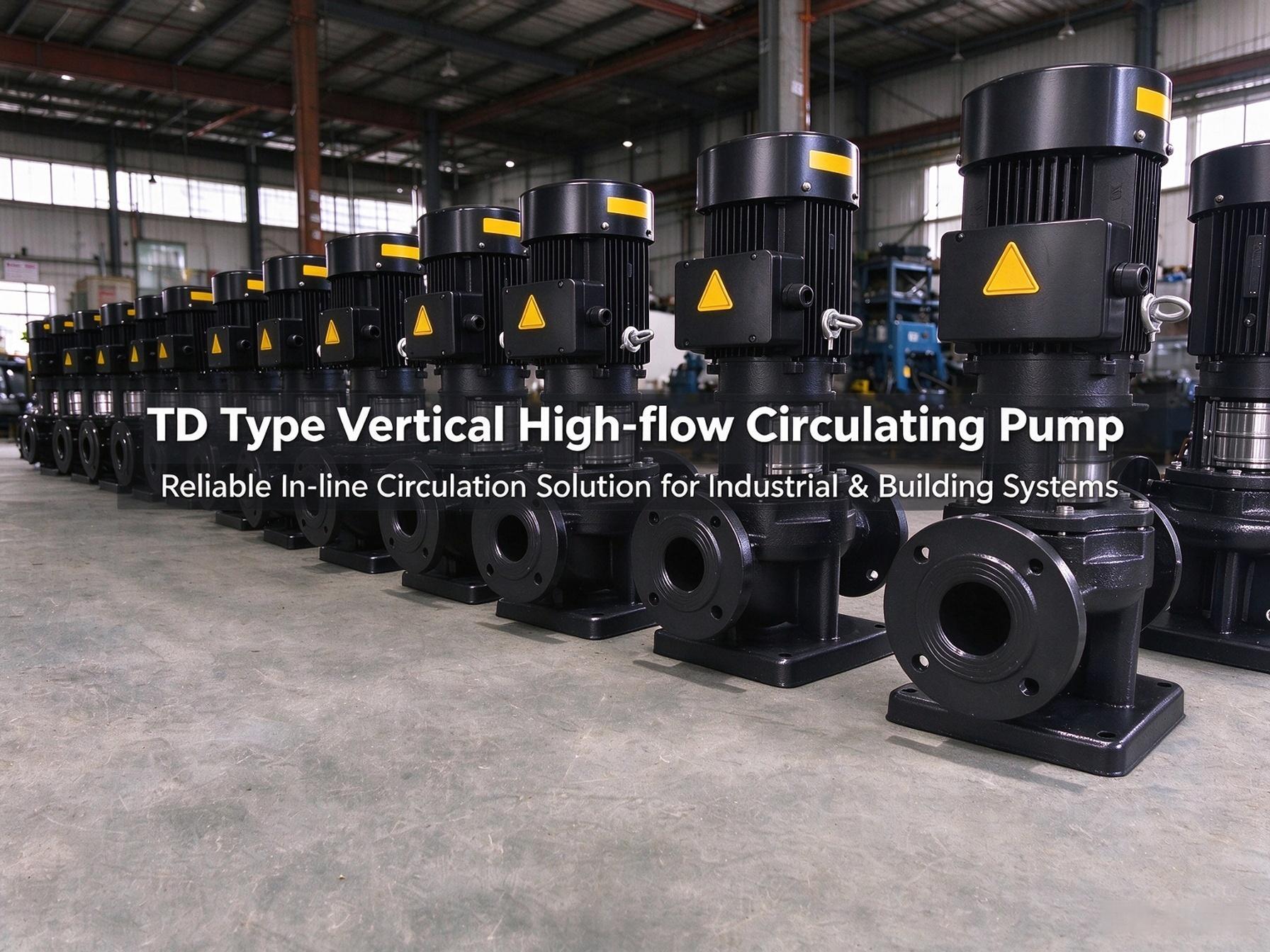

High Efficiency Axial Flow Pump Drives Large Scale Water Management
High-Efficiency Axial Flow Pump Drives Large-Scale Water Management
Axial flow pumps, as critical equipment in high-flow, low-head scenarios, are widely used in agricultural irrigation, flood control, industrial cooling, and more. Unlike centrifugal or sewage pumps, axial flow pumps rapidly transport water through axial thrust, making them ideal for scenarios requiring high flow rates and low head. This article explores the structural features, core advantages, and scientific selection strategies of axial flow pumps to help users optimize water resource management.
Structure and Working Principle
Structure
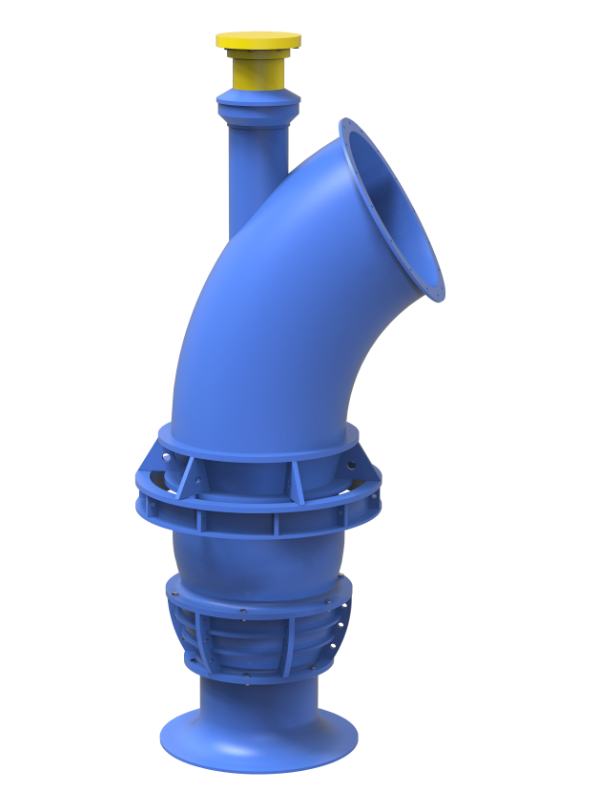
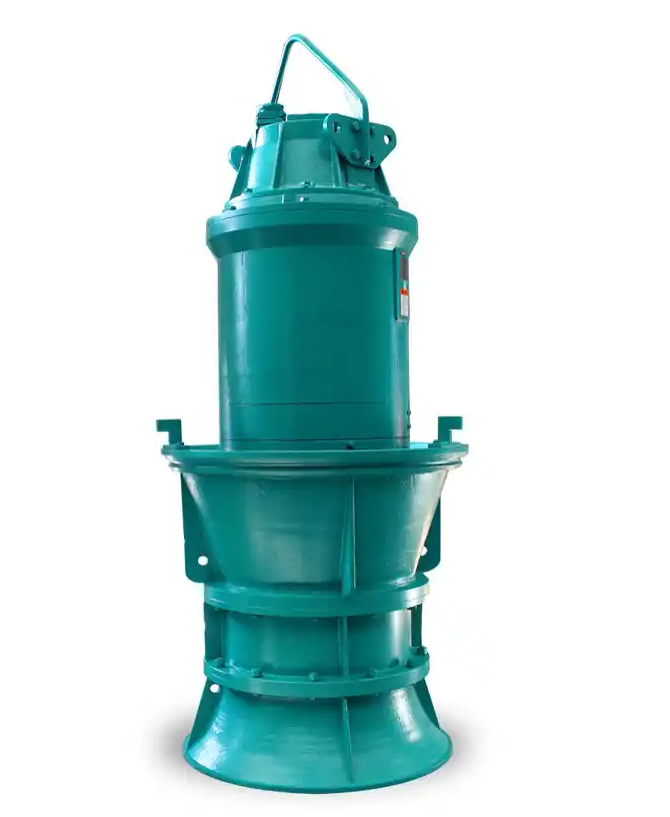
The main components of an axial flow pump include the inlet pipe, impeller, guide vanes, outlet pipe, pump shaft, bearings, and shaft seal. Axial flow pumps are classified into vertical, horizontal, and inclined types based on the installation method of the main shaft.
1. Inlet pipe
For small and medium vertical axial flow pumps, the inlet is a bell-shaped suction chamber made of cast iron. It evenly directs water into the impeller with minimal loss. The inlet diameter is approximately 1.5 times the impeller diameter. In large pumps, the suction chamber is typically designed as a flow channel.
2. Impeller
Impeller is the most important working part, which consists of blades, wheel rims and water guide cones, as shown in the following figure (1- wheel rims; 2- water guide cone; 3- leaves; 4- locating pin; 5- washer; 6- Tighten the leaf nut; 7- Crossbar; 8- Stud; 9- hexagon nut).
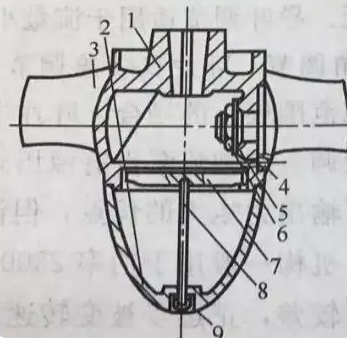
The blades are twisted and mounted on the hub. Based on adjustability, impellers are categorized as fixed, semi-adjustable, or fully adjustable:
- Fixed: Blades and hub are integrated; blade angle cannot be adjusted.
- Semi-adjustable: Blades are fastened to the hub with nuts. Adjustments require shutdown and disassembly.
- Fully adjustable: Blade angles can be modified via mechanical or hydraulic systems without disassembly.
3. Guide vanes
Located above the impeller, guide vanes eliminate rotational motion in the fluid, reduce head loss, and convert kinetic energy into pressure energy.
4. Shaft and Bearings